You Can Do Hard Things Retro Svg Review
When I am looking at a new digital asset for my embroidery studio, I don’t just look at the font. I look at the soul of the design. Does it have weight? Does it feel authentic to the medium we are working with? Recently, I pulled You Can Do Hard Things Retro Svg into my workflow to see if it could hold up against the rigors of real-world production. This is not just another motivational quote file; it is a statement piece that demands careful consideration before it hits the hoop.
The First Impression: Mood and Visual Weight
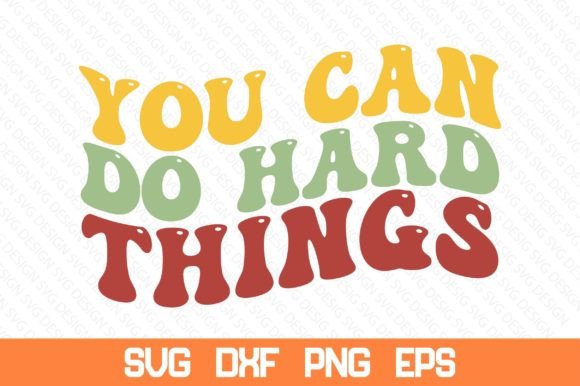
The moment you open the file, the retro aesthetic is undeniable. The typography carries a specific energy—one that feels nostalgic yet urgent. For an embroidery designer, the challenge with text-heavy designs is legibility after stitching. Thick lines and bold curves are your friends here. The "Retro" aspect suggests a certain thickness in the letterforms, which is excellent for stitch density management. However, the emotional resonance of the phrase "You Can Do Hard Things" pairs perfectly with this visual strength. It does not whisper; it supports.
In terms of layout, the design likely relies on strong geometric shapes or curved baselines typical of vintage signage. This makes it highly adaptable for various product placements. Whether you are placing it centrally on a heavyweight cotton tote bag or offset on the chest of a sweatshirt, the visual balance remains stable. It creates a mood of resilience, which is exactly what modern crafters and small business owners are seeking to convey through their handmade products.
Real-World Application: From Screen to Stitch
I recently tested this concept on a custom order for a client who wanted a personalized gift for a friend going through a difficult career transition. We chose a durable canvas tote bag design as the base. The decision to use this particular embroidery project was strategic. The bold nature of the design meant it would stand out even if the customer used standard polyester threads rather than expensive rayon.
For custom apparel, such as unisex hoodies or thick t-shirts, this design shines. The retro vibe aligns naturally with streetwear aesthetics, making it a strong candidate for Etsy seller inventory targeting the Gen Z and Millennial demographics. When stitched onto a dark fabric, the contrast becomes the star. If you are using a satin stitch for the letters, ensure your thread color pops against the background. A cream or mustard yellow thread on navy blue can evoke that 70s warmth while maintaining high readability.
Beyond apparel, this design translates beautifully to home goods. Imagine it embroidered on a kitchen towel or a pillow cover for a nursery. The phrase offers comfort, making it suitable for personalized gifts like baby blankets or christening gowns. In these contexts, the design acts as a gentle reminder rather than a shout, provided the scale is appropriate. For a handmade product like a quilted wall hanging, the graphic quality adds a modern touch to traditional crafting techniques.
Technical Considerations for Embroidery Designers
As a reviewer, I must address the technical realities of digitizing and stitching this file. Since the source is a vector format (EPS/DXF), the initial conversion to a machine-readable format requires judgment. The most critical factor is stitch density. Retro fonts often feature thick strokes. If the digitizer sets the density too high, the fabric will pucker, ruining the professional finish. Conversely, if the density is too low, the underlying fabric may show through, especially on lighter threads.
I strongly advise testing the design on scrap fabric first. Pay close attention to the corners of the letters. In a running stitch or tight satin stitch, sharp angles can sometimes cause thread breaks or tangling if not optimized correctly. Check whether the design works well in both light and dark fabric backgrounds by creating a black and white mockup. This helps you visualize the negative space and ensures the design does not become muddy when stitched.
Another vital step is selecting the right stabilizer. Because this design likely covers a moderate area, a cut-away stabilizer is recommended for stretchy fabrics like sweatshirts or caps to prevent distortion during the hooping process. For woven items like aprons or tea towels, a tear-away might suffice, but always err on the side of more support to maintain structural integrity.
Where to Use With Caution
While versatile, this design has limitations. Avoid using it on extremely small hoop sizes where fine details might get lost or cause mechanical issues with the needle. Textured fabrics, such as bouclé or heavy chenille, can obscure the clean lines of the retro typography, leading to a blurry result. Similarly, thin or sheer fabrics require additional backing to prevent the stitches from pulling the material out of shape.
Curved surfaces like baseball caps present another challenge. While the design can be adapted, the curvature may distort the perspective of the text unless carefully warped during the digitizing phase. Also, be mindful of dense stitch areas. If the design includes decorative accents alongside the text, ensure there is enough spacing between elements to allow the machine to move freely without thread nesting.
Impact on Brand and Customer Perception
For commercial embroidery businesses, the choice of design speaks volumes about brand consistency. Using a well-executed digital embroidery file like this one signals professionalism. Customers trust brands that pay attention to detail. A clean, crisp execution of a popular phrase enhances the perceived value of the finished product.
This design is particularly effective for craft business marketing. It lends itself well to printable mockups for social media advertising. The strong visual identity grabs attention in a crowded feed. When customers see a high-quality photo of the embroidery on a premium item, they are more likely to engage with the listing. It transforms a simple commodity into a meaningful keepsake.
Final Verdict for Makers and Sellers
You Can Do Hard Things Retro Svg is a robust addition to any design assets library. Its strength lies in its emotional clarity and visual adaptability. It works exceptionally well for holiday embroidery collections, back-to-school gear, and wellness-focused merchandise. However, success depends on your preparation. Always confirm licensing before selling finished items or digital products. Verify the file compatibility with your specific software, whether it is Inkscape, Adobe Illustrator, or your dedicated embroidery software.
By respecting the technical nuances—checking thread colors, optimizing stitch paths, and choosing the right fabric—you can turn this vector file into a stunning physical reality. It is more than just a graphic; it is a tool for connection. Whether you are a hobbyist making a gift for a loved one or an Etsy seller building a boutique brand, this design offers the versatility and impact needed to create something truly memorable.